
'Short term volatility is likely due to various factors, global and domestic; investors may use this as an opportunity to increase the allocation to equities.'

The July-September quarter saw significant deal momentum.

On Thursday, Adani Enterprises announced that it will not go ahead with acquiring Macquarie group's two road companies at an enterprise valuation of Rs 3,100 crore.

Divya Nair/Rediff.com speaks to students and experts to find out whether it is better to study management in India or try for an international MBA.

Newer asset classes such as data centres and rental housing gained prominence among investors.

'There is no linkage as far as the Indian power-generating business is concerned.'
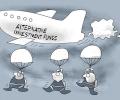
Alternative investment funds (AIFs) are yet to fully demat the outstanding units even as the deadline ended on October 31. Industry players say they are working on the transition from physical to electronic with the depositories Central Depository Services (India) Limited (CDSL) and National Securities Depository Limited (NDSL). Some said they are hoping for some relaxation from the market regulator Securities and Exchange Board of India (Sebi), given the teething problems they are facing.

'It won't be a V-shaped recovery. It'll be consolidation.' 'Investors might exit during that grind. It'll be painful.'

Equity markets will look for directions from global trends, ongoing quarterly earnings and investment patterns of foreign institutional investors (FIIs) in a holiday-shortened week ahead and may encounter volatility amid the scheduled monthly derivatives expiry, according to analysts. Equity markets will remain closed on Wednesday on account of 'Republic Day'. "This week is a holiday-shortened one and it's going to be critical due to the list of events and data that are lined up.

From the 30 Sensex pack, ICICI Bank climbed 3 per cent after the private sector lender posted a 14.5 per cent growth in standalone profit to Rs 11,746 crore for the second quarter ended September 2024. JSW Steel, Mahindra & Mahindra, Adani Ports, Tata Steel, Sun Pharma, Hindustan Unilever, Tata Motors and State Bank of India were the other big gainers from the pack.

Record equity divestment by the Reliance Group in its telecom and retail businesses garnering around $23 billion revved up the deal street in 2020, which otherwise would have gone down as one of the dullest on record, and dealmakers are seeing sunnier days in 2021 given the large scope for consolidation in a slew of sectors ravaged by the pandemic. With Jio Platforms alone garnering over $16 billion (Rs 1,18,318 crore) by selling 25.24 per cent stake and Reliance Retail notching up $6.4 billion (Rs 47,265 crore) by divesting around 9 per cent shareholding, the deal street signed off with $85 billion in the deal kitty across 1,270 transactions. This is higher by about 10 per cent over 2019. What is significant is that over a third of the total deal value came from Reliance transactions, say investment bankers.

India will be the world's third-largest economy by 2028 as it becomes the world's most sought-after consumer market and gains share in global output, driven by macro stability influenced policy and better infrastructure, Morgan Stanley said. From a $3.5 trillion economy in 2023, the Indian economy is projected to expand to $4.7 trillion in 2026, which will make it the fourth largest in the world behind the US, China and Germany.

The share of life insurance policies sold by top private insurers in the rural areas declined in the financial year 2023-24 (FY24) compared to previous year. SBI Life, HDFC Life, ICICI Prudential Life Insurance -- the top three players from the private sector-- have seen the share of insurance policies sold in rural areas drop in FY24 as compared to the previous financial year. Max Life Insurance's share of rural policies recorded an increase in FY24.

Maruti Suzuki India (MSIL) will issue equity shares on a preferential basis to parent Suzuki Motor Corporation (SMC) to acquire 100 per cent stake in the latter's Gujarat plant. This deal is expected to increase the share base of MSIL by about 4 per cent. And consequently, it will raise SMC's shareholding in Maruti by around 1.8 percentage point. "Whether it is in terms of PAT (profit after tax) or earnings per share (EPS) or dividend per share (DPS) of MSIL, the share-swap option will give shareholders a better deal than any other option such as cash payment," MSIL chairman RC Bhargava told reporters during a press conference.

The regulator may float consultation papers for FPIs and private equity funds and the final decision will be taken after taking into account views of all the stakeholders

'Q1 is going to bear the brunt of the second wave, exposing full-year GDP forecasts to downward revisions, unless phase-3 of vaccination is executed quickly.'

The Indian diaspora remain bullish despite single-digit equity market returns since May 2014, says Pavan Burugula.
'A rigid or overly broad interpretation could lead to a chilling effect on investments and growth in sectors traditionally driven by private initiative.' 'Entrepreneurs may fear that their assets could be arbitrarily appropriated by the State under the guise of serving the 'common good' without sufficient legal safeguards.' 'The judgment thus supports a more nuanced view, one that balances individual property rights with public welfare objectives.'

Union Finance Minister Nirmala Sitharaman on Saturday announced a fresh Rs 15,000 crore 'SWAMIH Fund' for completion of 1 lakh units in stalled housing projects across various cities, a move aimed at providing relief to distressed homebuyers whose investments are stuck. In November 2019, the Centre announced a stress fund named 'Special Window for Affordable and Mid-Income Housing' (SWAMIH), to complete stalled housing projects across India.

According to EY's private equity deal tracker, Brookfield-Reliance Jio's $ 3.7 billion deal is the largest ever PE/VC deal in India, surpassing the $ 2.5 billion investment made by Softbank in Flipkart in 2017.
'It has changed the political character of India by ejecting socialism as an ideology from the Constitution of India.'
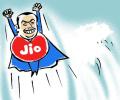
Investments totaling over $9.5 billion in Jio Platforms by a clutch of private equity firms, following social media giant Facebook's $5.7 billion mid-April investment in the company, helped overall.

Quarterly earnings from corporates, global trends, and trading activity of foreign investors will guide market sentiment this week, analysts said, adding that benchmark indices may face volatile trends. "The upcoming release of Q2 results will be closely watched, providing insights into corporate performance. "Meanwhile, the escalating tensions between Israel and Iran introduce a significant geopolitical risk, potentially leading to increased oil prices and market volatility.

Global private equity major Blackstone today said Akhil Gupta, who founded and led its operations in India for eight years, will step into a non-executive role.

'The finance minister missed yet another opportunity to simplify the income tax structure in the Budget.' 'This was an opportune moment to get rid of the old tax system entirely and move fully to the new system,' asserts M Govinda Rao, member of the 14th Finance Commission.

Saudi Arabia has submitted a bid for British soccer club Manchester United PLC ahead of Friday's deadline, the Telegraph reported on Thursday.

'A long-term investor with a 4 to 5 year horizon could invest in this theme via SIPs.'

BP Plc has won a bid to operate ONGC's giant Mumbai High oil and gas field by offering up to 60 per cent increase in output over baseline, the state-owned firm said on Wednesday. State-owned Oil and Natural Gas Corporation (ONGC) had in June last year floated a tender seeking foreign partners to reverse declining output at its flagship Mumbai High fields, offering a share of revenue from incremental production plus a fixed fee but not any equity stake.

Private equity investments into domestic companies fell sharply year-on-year by 42 per cent to $23.3 billion in 2022, which is the lowest since 2019, when it was $15.8 billion, according to an industry report. The numbers reflect the overall funding winter that the startup space in particular, and the overall foreign investments in general have been witnessing since the Ukraine war began last February. Private equity investment inflows into the country fell by a sharp 42 per cent in 2022 from last year to $23.3 billion -- the lowest annual inflows since 2019 when it was a low $15.8 billion, but still relatively elevated compared to historical levels, said Elaine Tan, a senior analyst at Refinitiv, the LSEG business arm that provides financial markets data and insights.

Investors' wealth on Monday surged Rs 4.21 lakh crore as markets bounced back after five days of fall. The BSE Sensex jumped 602.75 points or 0.76 per cent to settle at 80,005.04. During the day, it surged 1,137.52 points or 1.43 per cent to 80,539.81.

The billionaire Adani family, which is building an in-house construction and engineering ecosystem by acquiring ITD Cementation and PSP Projects, is actively seeking additional acquisition opportunities, according to bankers. As part of its $100 billion investment plan by 2030, the Ahmedabad-based group has undertaken several large-scale construction projects, including the Dharavi redevelopment, Ganga Expressway, a mega convention centre in Mumbai and airports.

Russian firms expand their footprint in India. And take bigger steps to do business with India's private sector.

The move will help the LPs save the fee they pay private equity firms and play an active role in these investments.

'Stay disciplined, and remain invested.' 'Volatile times are the best to invest in structural opportunities at the right price.'

Hospital chain Aster DM Healthcare's plans to sell its Gulf business may run into rough weather with voting advisory firm Institutional Investor Advisory Services (IiAS) raising concerns over the transaction. Recommending an 'against' vote on the resolution, IiAS has said there is no clarity on how Aster DM will utilise the proceeds that it will obtain by selling the unit, which contributes to bulk of its revenues. In November, Aster DM had announced its plans to sell its wholly-owned subsidiary Affinity Holdings, which conducts business in the Gulf Cooperation Council (GCC) region, to Alpha GCC for $1 billion.

'Within India, people want high-quality, personalised banking services, and the demand for such services has exploded.'

'India's fundamentals are a lot better (than those of other emerging market economies).' 'India will suffer (witness a fall in its stock market) what I call the second order effect.' 'And the second order will happen when these funds (belonging to macro and hedge fund investors and which have leveraged Japanese yen-carry trades), because they lose money elsewhere as lot of their positions were financed by borrowing Japanese yen, will have to book profits in investment destinations where they are making money, including in markets like India.' 'They (these investors) will have to effectively sell in countries like India and which is the consequence (the crash in equity markets) that Indian markets might see.'
Coffee Day Group, which runs businesses from coffee cafes to wealth management to furniture to logistics, is understood to be readying the stage for a possible $100-million fund raise through the private equity route.

'The shifts in US involvement in global conflicts and geopolitical alliances could introduce uncertainties.'

Finally, some good news for the Indian startup ecosystem. After four consecutive half-year periods of declining funding since 2022, the first half (H1) of 2024 has shown an upward trend compared to the second half (H2) of 2023. According to the India Tech Semi-Annual Funding Report H1 2024 by Tracxn, Indian technology (tech) startups raised $4.1 billion in H1 2024, marking a 4 per cent increase from $3.96 billion in H2 2023.
